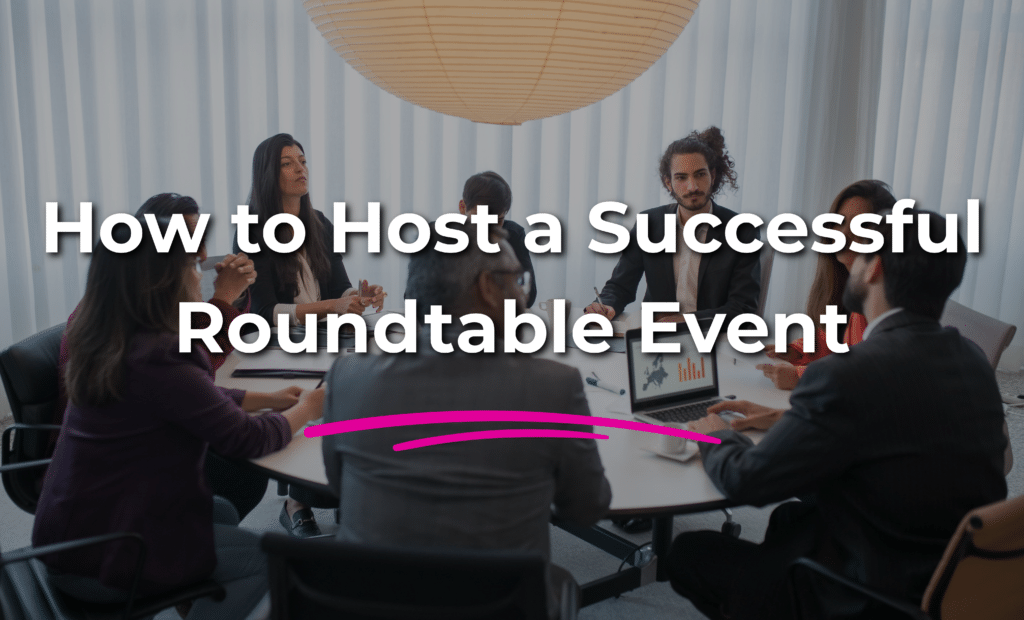
Roundtable events are a fantastic way for businesses to bring industry experts together, spark meaningful conversations and position themselves as thought leaders within their sector.
Unlike traditional networking events, roundtables provide an opportunity for smaller groups of stakeholders to openly discuss industry challenges, share expertise and explore potential solutions.
However, hosting a successful roundtable event takes careful planning, from securing the right attendees to structuring the discussion and making the most of the content opportunities afterwards.
At Refresh PR, we’ve seen first-hand how valuable these events can be. We recently organised a roundtable in Glasgow on behalf of a building products manufacturer, bringing together professionals from across Scotland’s housebuilding sector to discuss the challenges affecting residential development.
Drawing on our experience, here are five top tips for hosting a successful roundtable event.
1. Establish a clear purpose for your roundtable
Before planning your event, it’s important to establish exactly what you want to achieve.
Whether your goal is to strengthen industry relationships, generate valuable insights or position your business as a thought leader, having a clear objective will help shape the discussion and ensure attendees gain something meaningful from the experience.
For our client’s roundtable, the central theme was ‘What does it take to deliver homes in Scotland?’
The aim was to bring together voices from across the housebuilding supply chain to explore the challenges affecting residential delivery and identify opportunities for greater collaboration.
Our tip: Choose a timely, industry-relevant topic that encourages genuine discussion rather than focusing too heavily on promoting your business.
2. Get the right people around the table
A successful roundtable relies on having the right mix of attendees. Bringing together people with different experiences, expertise and perspectives will lead to a more balanced and insightful conversation.
For our Glasgow event, representatives from across Scotland’s housebuilding sector attended, including developers, contractors, merchants and technical specialists from organisations such as Robertson Homes, SNIPEF and Huws Gray.
We also secured David Raine, Head of Policy Development at Homes for Scotland, to chair the event. His industry knowledge and policy experience helped provide a credible foundation for the discussion.
Our tip: Prioritise quality over quantity when building your guest list, and consider appointing an experienced chairperson who can guide the conversation and encourage everyone to contribute.
3. Plan a structured but engaging agenda
While roundtables should encourage open discussion, having a clear agenda is essential to keeping conversations focused and productive.
The key is to strike the right balance between structure and flexibility, allowing attendees to explore relevant topics without the discussion losing direction.
For our event, we developed an agenda that included an opening discussion, two smaller focus groups and a final session bringing everyone back together.
The focus groups explored different challenges, including compliance and building warrants, specification, product availability and project delivery.
This format allowed attendees to share their expertise in smaller groups before coming together to discuss common themes and potential solutions.
Our tip: Prepare open-ended questions in advance, but allow conversations to develop naturally. Often, the most valuable insights come from discussions you hadn’t anticipated.
4. Make the most of the content and PR opportunities
A successful roundtable event offers much more than an opportunity to network. It can also provide a wealth of valuable content to support your wider PR and marketing strategy.
From thought leadership articles and blog posts to social media content and industry reports, the insights generated during a roundtable can be repurposed across multiple channels.
For our Glasgow event, we planned to capture the discussions through note-taking and audio recording, alongside photography throughout the morning.
Our post-event communications plan also included LinkedIn content and a document summarising the key takeaways, helping to extend the value of the discussion beyond the event itself.
Our tip: Consider your content strategy before the event takes place. Make sure you have a plan for capturing key insights, securing permissions and turning the discussion into engaging content afterwards.
5. Keep the conversation going after the event
The work doesn’t stop once the roundtable is over. Following up with attendees is essential for maintaining relationships and maximising the long-term value of the event.
A follow-up plan could include sharing event photography and social media content, sending thank-you emails and producing a key takeaways document for attendees.
These activities help reinforce the value of the discussion, maintain engagement and create opportunities for future collaboration.
Our tip: Plan your follow-up activity in advance and aim to reconnect with attendees while the event is still fresh in their minds.
Looking to host a successful roundtable event?
When planned and delivered effectively, roundtable events can be a powerful addition to any PR strategy, helping businesses build relationships, demonstrate industry expertise and generate valuable content.
Our experience organising the roundtable in Glasgow highlights the importance of combining a relevant topic with the right attendees, a well-structured agenda and a clear post-event communications strategy.
At Refresh PR, we help businesses create meaningful opportunities to connect with their industries, from developing event concepts and securing stakeholders to managing logistics and maximising PR opportunities.
Thinking about hosting a roundtable event? Get in touch with the Refresh PR team to find out how we can help.