 " />
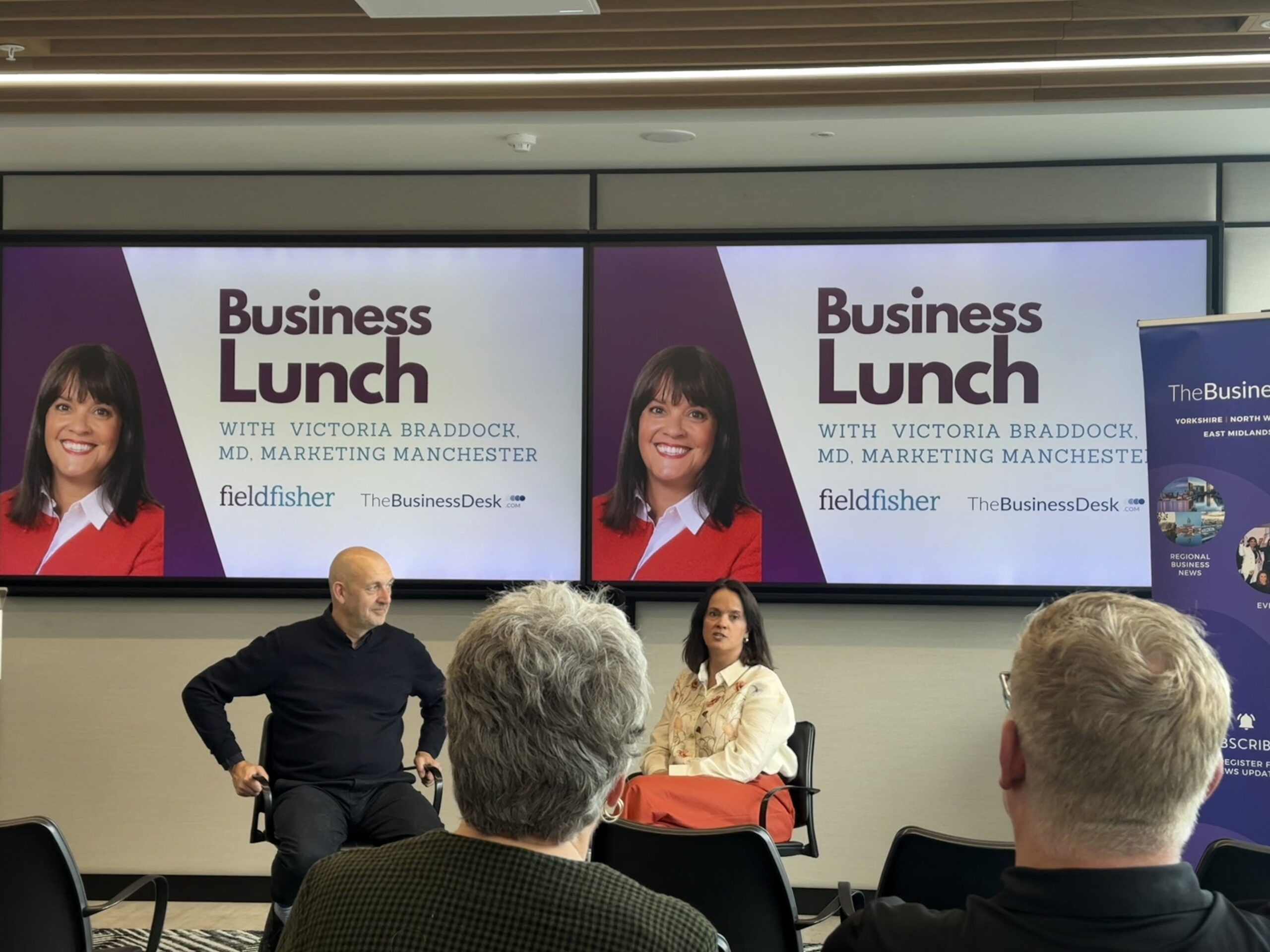
" />This week we heard from Victoria Braddock, MD at Marketing Manchester, who shared a candid and insightful perspective on how Manchester has evolved into one of the UK’s most confident, collaborative and globally recognised city brands. The fireside chat was hosted by The Business Desk at Fieldfisher’s Manchester office, which offered panoramic views of the city centre from the 17th floor of No.1 Spinningfields. And, lucky us, the sun was out!
Victoria’s own story is closely intertwined with the city’s transformation. Starting her career in retail before moving into the city’s visitor information centre, Victoria worked her way through the organisation over two decades, mirroring Manchester’s own journey from post-industrial underdog to international destination. That lived experience gives her a unique perspective on what it really takes to build a place brand that resonates globally.
Manchester, a city shaped by long-term ambition
A consistent theme throughout the conversation, with Michael Taylor, was the importance of long-term thinking. Manchester’s growth didn’t happen overnight. Instead, it is the result of a 30 year strategy built on strong leadership, shared ambition and a willingness to take risks. Something we can all learn from.
Even failure played a role. An early Olympic bid may not have succeeded, but they helped establish a mindset that Manchester could compete on the world stage. Manchester came runner up to Sydeny’s winning big – something I didn’t know. That belief in being able to host a global sports event became reality with the successful bid for 2002 Commonwealth Games. The win elevated the city’s global profile, accelerated infrastructure development and left a lasting cultural and sporting legacy.
For Victoria, this was Manchester’s pivotal moment. A step change in how the city saw itself and how it was seen by others on a global stage.
Collaboration as a competitive advantage
If there’s one defining factor behind Manchester’s success, it’s collaboration, according to Victoria. She was clear that no single organisation drives the city forward. Instead, it’s a deeply connected ecosystem which includes local authorities, businesses, cultural institutions and agencies working together toward a shared goal.
Marketing Manchester sits at the centre of that ecosystem, but acts more as a convenor than a controller. With a relatively small team, its impact is amplified through partnerships, networks and a shared sense of purpose across the city-region.
That collaborative mindset extends beyond Manchester itself. The city actively positions itself as a gateway to the North, working closely with neighbours like Liverpool and beyond. It’s a recognition that in a global marketplace, cities don’t win alone, they win as part of a wider, connected offer.
Manchester is the gateway to many national parks, northern cities and even Scotland and Wales for foreign visitors.
Events, infrastructure and the built environment
One of the most tangible outcomes of Manchester’s strategy is the transformation of its built environment. Over the past two decades, the city centre has been reshaped. Its city centre population has surged from 1,000 in the 90s to 100,000 people now. The skyline is evolving. The Beetham Tower is no longer an outlier but accompanied and outgrown by bigger towers at Deansgate Square. Manchester’s hospitality and cultural infrastructure is also expanding at pace.
Events have been a major catalyst for the city. This year, Manchester has hosted The Brits and MOBO Awards, last year Chanel called Thomas Street, in the Northern Quarter, home for it’s fashion show.
From global conferences to major cultural moments, they don’t just generate short-term economic impact, they also create long-term demand. Hotels get built, public spaces improve, and the city becomes better equipped to attract even bigger opportunities.
As Victoria put it, the growth of the city’s physical landscape is closely tied to its ability to attract people. Whether that’s visitors, investors or talent. The expansion of Manchester Airport, now serving hundreds of global routes, has been equally critical in supporting that growth and reinforcing Manchester’s international reach.
Confidence, identity and storytelling
Another key theme was confidence. Manchester doesn’t try to be something it’s not. Instead, it leans into its strengths. Its culture, music, sport and industrial heritage. It uses these things to tell its story with clarity and conviction.
Victoria pointed to cities like Helsinki, New York City and Barcelona as examples of places that understand their identity and communicate it consistently. Manchester has taken a similar approach, building a brand that feels authentic rather than manufactured.
That confidence also shows up in the types of opportunities the city attracts reinforcing its reputation as somewhere that is both credible and creative.
What place marketers can learn from marketing Manchester
Manchester’s marketing journey offers some clear lessons for place and destination marketing leaders.
First, consistency matters. Long-term strategies, backed by stable leadership, create the conditions for real transformation. Cities that constantly reset their vision rarely achieve sustained impact.
Second, collaboration is not optional. The most successful place brands are built collectively, not by a single organisation. Creating the conditions for partnerships across sectors and geographies is critical.
Third, demand drives development. Strong destination marketing doesn’t just promote a place, it shapes it. By attracting events, investment and visitors, it influences the evolution of the built environment itself.
And finally, confidence is key. The most compelling city brands are rooted in authenticity. Knowing what makes a place distinctive, and being bold enough to lead with it, is what cuts through on a global stage.
Manchester’s story is still being written. But Victoria’s story and insights make clear that its success to date is no accident. Manchester’s rise as a global city is the product of vision, collaboration and a city that has learned how to tell its story to the world.
If you found Victoria’s story as inspiring and as insightful as we did please do share a comment.
Refresh is a PR & marketing agency that operates in the built environment and construction industries, and supports a number of organisations. We are constantly networking and connecting leaders in the sector, and supporting them with marketing strategies that make a real impact.
- Share this