 " />
" />The KBB sector is going through a reset. Following years of pandemic-fuelled demand, the market has cooled and consumers have become more cautious. Big purchase decisions are taking longer. This can present a challenge to marketing managers and directors, as their pipelines become less predictable. Showroom footfall isn’t what it was, while online only brands even more points of contact are needed to convert a purchase.
Because while the market is shifting and unpredictable, it’s far from shrinking. The sector is recalibrating not retreating. Here’s how brand marketers can capitalise on a moving market in 2026.
The KBB market is in flux not freefall
Data shows that kitchen installations dropped to just over 1 million in 2024, down more than 18% compared to 2022. While the headline figure has fuelled plenty of pessimism, if you dig deeper a more nuanced picture emerges. Merchant sales in KBB sector actually rose by 3.5% in early 2025. Bathroom renovations are also gaining momentum, with 55% of consumers upgrading in 2025, while around 1 in 10 homeowners are still planning kitchen or bathroom projects over the next year.
This shows that demand hasn’t disappeared, but that consumers are more selective, considered, and value-driven. These insights can be used to inform marketing strategies for many kitchen, bedroom and bathroom brands.
When these insights are considered alongside the wider economic pressures, such as mortgage uncertainty, cautious borrowing, and high renovation costs, it’s clear why consumers are hesitating on big-ticket decisions.
For marketers, this creates a fundamental shift. The task is to unlock demand rather than generate it.
The trends reshaping KBB marketing in 2026
1. The Rise of the ‘Considered Consumer’
KBB buyers in 2026 are doing more research than ever, taking longer to decide, and expecting more reassurance than those in previous years.
They want transparent pricing and flexible finance options, alongside social proof and peer validation (think case studies), and expert guidance online and in-person at showrooms or trade shows. Factors such as genuine customer reviews and quick delivery are now central to purchase decisions. This can be a problem for marketers who have less control over these elements. It means your brand isn’t competing on product qualities alone, it’s competing on confidence, which marketing can control.
2. Smart, sustainable, seamless – Macro trends in marketing messaging
These three macro trends continue to dominate the sector. There is no getting away from smart technology integration, sustainability & energy efficiency, and ease-of-use, accessibility & future-proof design.
Consumers are increasingly willing to invest in high-ticket products but only where value is clear. Energy-efficient features, for example, are gaining traction as households look to offset rising costs. Marketers need to go further and connect innovation to real-life benefits, including cost savings, convenience, and longevity.
3. The shift from ‘off-the-shelf’ to ‘made-for-me’ – Personalising the experience
Customers increasingly want a customised and experience-led retail experience. Shoppers expect personalised design journeys, 3D visualisation tools, and inspirational showrooms. Marketers must remember they are selling a lifestyle and aspirational home transformation, rather than just a functional kitchen, bedroom or bathroom.
4. The DIY vs DIFM divide – segmenting audiences
Marketers are also facing a growing divide among their customers. On one side, cost-conscious consumers are leaning into DIY. They want to get a high-end look for less, or make their renovation cheaper by installing expensive products themselves. On the other hand, there’s a growing preference for professional design and installation, particularly among higher-value customers.
Marketers must segment their audiences rather than rely on one-size-fits-all messaging, which will miss both audiences. As part of strategy sessions, Refresh drills down into audiences and their wants, needs and drivers, to make sure that the suggested approach reaches the right people at the right time with the right messaging.
The marketing challenges facing the KBB sector
All things considered, KBB marketers are facing a series of on-going challenges. Longer sales cycle, reduced footfall in some segments, increased competition from both independents and national chains, and margin pressures from price-sensitive consumers. However, the KBB brands that will be successful are those that acknowledge and overcome these challenges.
How KBB brands can stand out in 2026
1. Create a distinct brand position
Many KBB brands look and sound the same. While the market is saturated and any products have the same features or functionality, brands must still stand out. If your proposition is simple quality products at competitive prices, you’re essentially invisible and forgettable.
Instead, define what you stand for, who your product is for, who you’re not, and why you’re different in a crowded market. This clarity is important for long-term brand building.
2. Invest in content that builds confidence
In a slower market, content becomes your most powerful sales tool. It must be quality and reflect the brand. Each time your product is featured, it should communicate the same message, look and feel. This is important for luxury brands. Use real project case studies, engaging behind-the-scenes design stories, educational guides, video walkthroughs and expert advice. When used correctly, this content will accelerate your pipeline and push people further down the sales funnel.
3. Turn showrooms into experiences
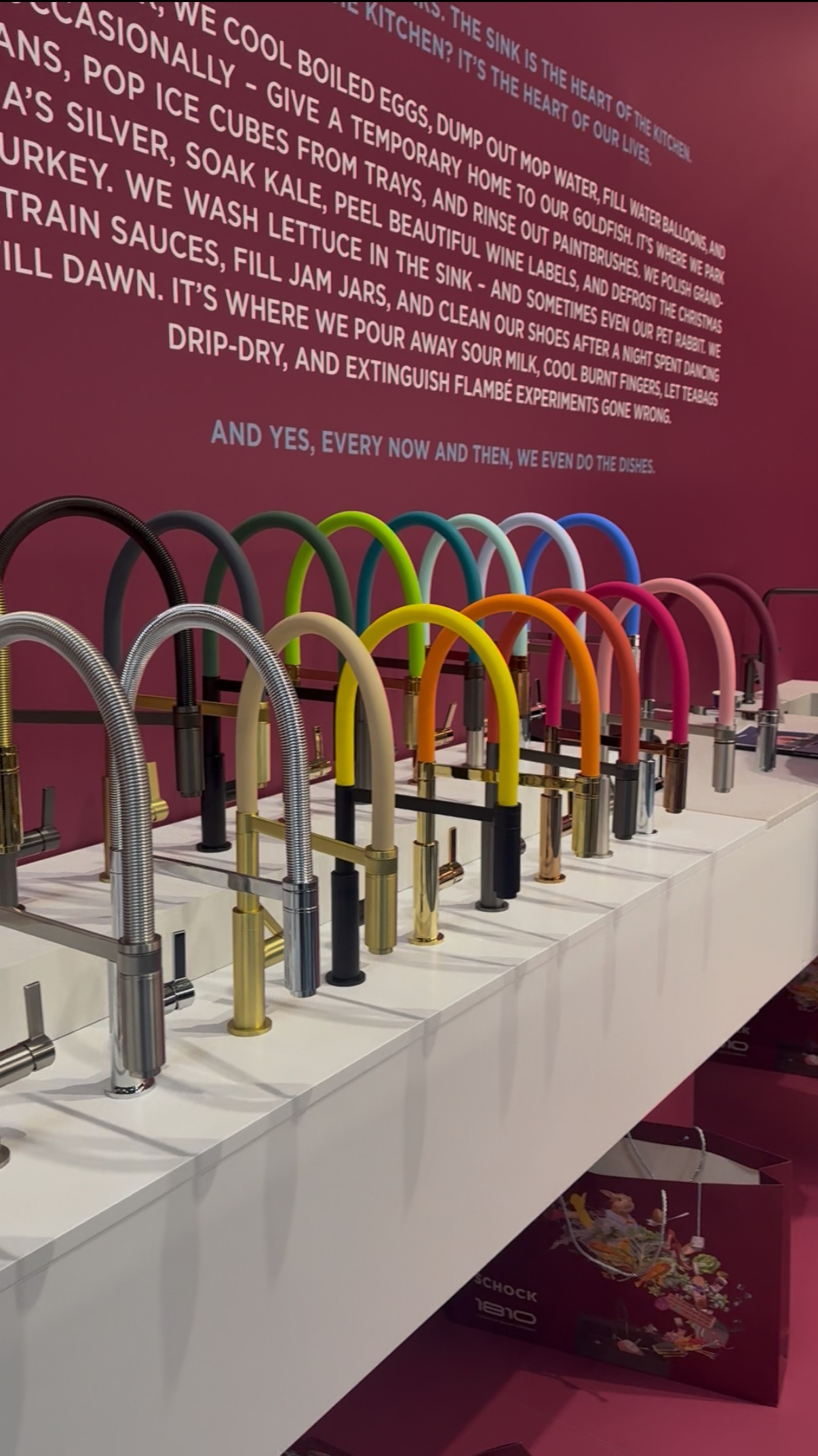
After an annual trip to the KBB Birmingham show, it is clear to see that the showroom is no longer just a display space. It’s much more. The most successful brands are creating immersive environments with theming throughout their space, creating quality merchandise that visitors want to take away with them. They are also integrating digital tools into their physical spaces to give prospects a real sense of what difference they can make to their space. Finally, staff are trained as consultants who can have meaningful conversations, and are not solely salespeople.
All these points ring true in a showroom too. When footfall drops, every visit matters more.
4. Leverage social proof continually
In a high-consideration purchase, trust is everything. That means reviews should be front and centre of your marketing, user-generated content (UGC) offering a real look at your product must be doubled down on, before-and-after transformations highlighting the contrasting change you deliver, and viral influencer or designer collaborations.
While amplified, word-of-mouth is still one of the most powerful drivers in the KBB category. Marketers who make the most of the different forms that social proof can take will be in the best position to build and convert their sales pipleines.
5. Embrace performance and brand in KBB marketing not one or the other
Much of marketing is now a battle between performance and brand. However, the two are not mutually exclusive. Short-term lead gen alone won’t cut it and neither will brand awareness efforts in isolation.
The KBB marketers that win in 2026 will capture demand through organic search (search engines and AI) and paid media. They will also create demand through brand storytelling and PR, and finally nurture leads through CRM and remarketing. It’s the combination and reiteration of key messages that drives growth.
KBB marketers must continue to build their brands
Periods of uncertainty tend to separate the market. Some brands pull back on their marketing and cut budgets, become reactive, and compete on price. Others invest, sharpen their positioning, and build long-term equity. The KBB sector is still filled with opportunity but only for those willing to double down on the steps outlined above. Standing out in 2026 isn’t about shouting louder, it’s about being clearer, more relevant, and more valuable than everyone else in the room.
If you would like to discuss how Refresh can support you with your marketing in the KBB sector, whether it is a brand awareness building campaign, stand-out attendance at a trade show, or a hard-working press office that prioritises product placements in the right media titles, contact us.
- Share this