 " />
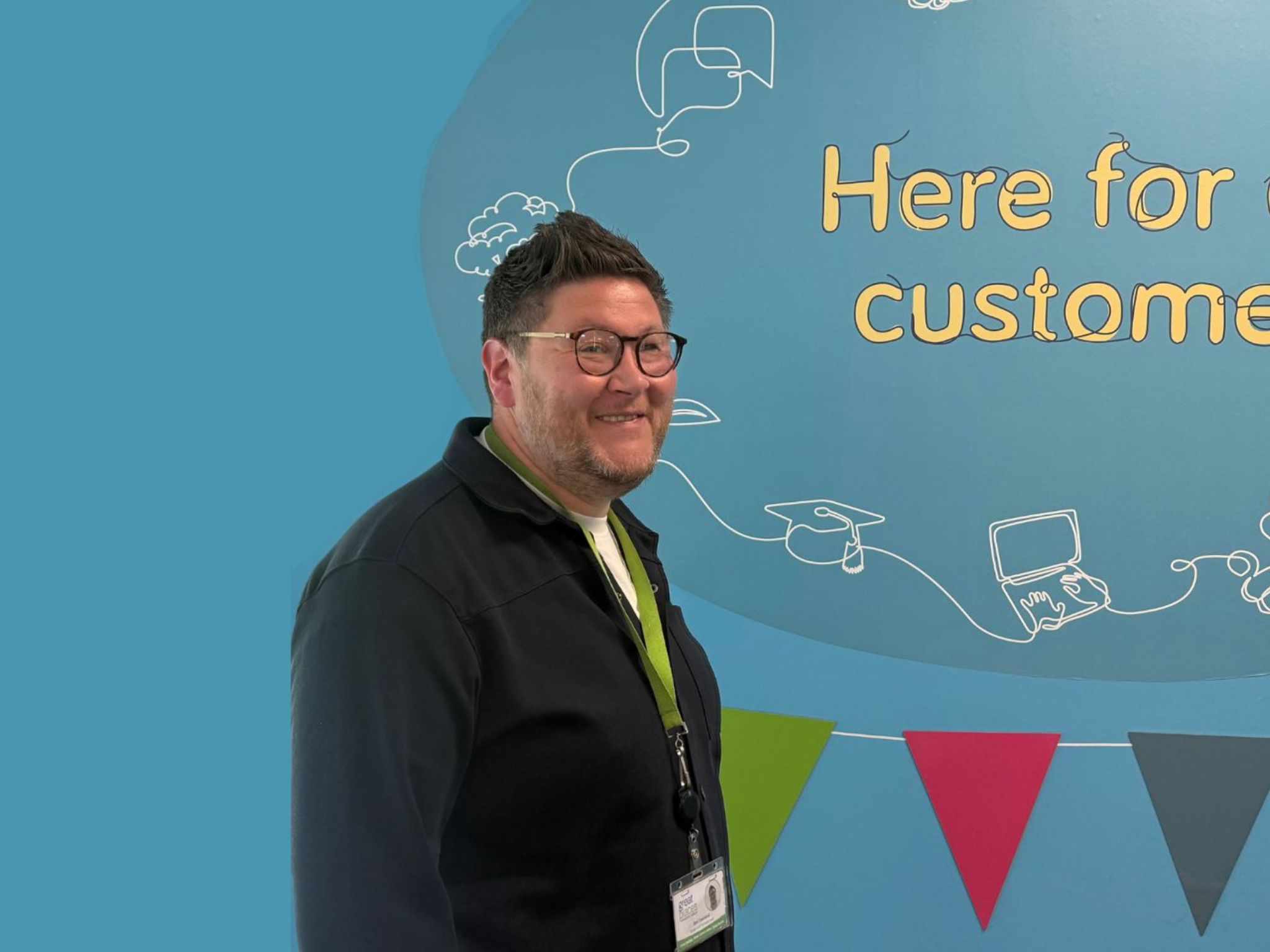
" />We sat down with Ben Townend, Design & Technical Lead at Great Places Housing Group, to explore how housing can move beyond “just homes” and become something far more meaningful.
At the heart of our conversation was the organisation’s Russell Road development, a pioneering project that is quietly reshaping what inclusive, community-led housing can look like in the UK.
Great Places had a record breaking 12 months last year. It delivered 726 new affordable homes and exceeded targets in 2024/25. “This is part of a broader momentum rather than a one-of success”.
Are you bucking the housebuilding trend or building towards it?
“I think, rather than bucking the trend, we probably punch above our weight as an organisation in terms of what the development team delivers.”
For Ben, success hasn’t come from chasing headlines, it’s come from evolving capability. By bringing in expertise from outside traditional social housing, Great Places has raised its internal standards and ambition.
“We’ve started to elevate the skills within the team so that we’re constantly trying to do a bit better all the time – that culture permeates.”
This mindset of continuous improvement, curiosity, and learning underpins everything. It’s also what made a project like Russell Road possible.
What challenges and opportunities are shaping housing delivery?
“There are so many challenges, but for me, all of those challenges breed opportunity.”
From regulation to funding pressures, the environment is complex. But rather than limiting creativity, Ben sees constraints as a catalyst.
“It allows us to look for alternative solutions than doing it how we’ve always done it before. That’s why every development is different. We can’t simply crack what social housing looks like then build identical developments everywhere.”
That thinking is critical when addressing overlooked needs, like those of the older LGBTQ+ community, where traditional models simply don’t work, and certain groups and demographics are seeing difficulty in maintaining their lifestyles in later life.
What does good placemaking look like in practice?
“I don’t think there’s only one thing that makes something a good place, rather it’s how a place makes you feel.”
For Ben, placemaking starts with empathy. It’s about understanding the people who will live there, not just demographically, but emotionally and socially.
“It’s really understanding who’s going to live there, what’s important to them, what’s going to make their lives better.”
This philosophy becomes especially powerful when applied to communities that have historically been underserved or misunderstood.
How did your work at Russell Road become a blueprint?
Russell Road didn’t start as a design exercise, it started with a problem.
“What’s been identified is an issue with LGBTQ+ members having to ‘roll back’ on their lifestyle a little bit once they go into older persons’ accommodation.”
In many traditional settings, residents felt forced to hide who they were. “It’s referred to as moving back into the closet, if you will. Our insights showed this community felt like they couldn’t be themselves in certain settings.”
That insight became the foundation for something radically different. “Even in old age, people should continue to be able to be who they are.”
The result? The UK’s first purpose-built LGBTQ+ extra care scheme, designed not just for safety, but for affirmation.
“Building an affirmative facility like Russell Road, and creating safe spaces, and opportunity for engagement really opened our eyes to what’s important.”
How do you gather the insights to shape your housebuilding designs?
“We’re quite lucky in that we’ve got our customer involvement team. We ask qualitative questions rather than relying purely on data. Great Places focuses on lived experience. We listen, engag, and co-create with future residents.”
“If you’re not communicating with people, you’re not understanding what’s shifting, and without that, we’re not delivering what people want.”
At Russell Road, this went far beyond consultation. “It’s been massively helped along and led and guided by the community involvement group, even down to things like picking floor finishes.”
This level of involvement transformed the scheme from housing for a community into housing with a community.
What makes this social housing model different?
Russell Road isn’t just inclusive, it’s intentional housebuilding and placemaking.
“It’s something that you wouldn’t necessarily think was required, but ultimately when you consider it fully, you understand why there is a need.”
It challenges a long-standing assumption that housing can be one-size-fits-all.
“There isn’t one size fits all solution. Different customer groups will need and want different things.”
By centring identity, safety, and belonging, the scheme creates something deeper than accommodation. It creates continuity of life.
Can this inclusive housebuilding approach be replicated?
“Russell Road is going to act as a model to roll out across the UK, hopefully.”
While not every scheme can replicate the same level of engagement due to time and cost constraints, the principles absolutely can.
“It’s a really good reminder to reinvigorate what we do, so that we continuously improve and always have that customer focus at heart.”
In that sense, Russell Road isn’t just a development, it’s a blueprint.
How important is storytelling in bringing people on the journey?
“Storytelling starts from an early stage.” For projects that challenge norms, narrative is essential, not just to explain what is being built, but why.
“It’s really important that we have a narrative that demonstrates the benefits, selling outcomes ultimately.”
“And the story doesn’t stop at planning. It continues throughout the building stages. We’re trying to get everybody on our journey, all rowing in the same direction.”
What excites you about the future of housing?
“I don’t think there’ll ever be a day where we can sit back and go, we’ve cracked it.”
For Ben, the future is defined by constant evolution, and driven by changing needs, expectations, and technologies.
“We’re always innovating out of necessity. And when that innovation is grounded in real human need, it becomes meaningful.”
“I moved into housing, from architectural practice to make it feel like I was doing something important.”
What does a fresh perspective mean to you?
“It’s taking views from outside and learning from your customers. A fresh perspective isn’t just about new ideas, it’s about better listening, broader thinking, and honest reflection.”
“Pulling on all the threads to make something that’s meaningful or valuable.”
Challenging the construction sector to think differently
The Russell Road development shows what’s possible when housing starts with people, not products.
It proves that inclusivity isn’t a feature you add at the end. It’s something you design from the very beginning. Importantly, it also encourages the sector to think differently, not just about how we build homes, but about how we enable people to keep being themselves within them.
To read more interviews in our Refresh Perspective series, visit our campaign page. If you have a story or perspective to share, or know someone in construction, manufacturing or the built environment who does, get in contact with us.
- Share this